


오션파크로 떠나는 즐거운 여행에 필요한 모든 것
Ocean Park and The Oasis ONE International Limited (The Oasis ONE) today showcased more than 2,000 giant grouper (Epinephelus lanceolatus) fingerlings reared at Ocean Park under their collaborative fish restoration project titled Nurture Our Future, leveraging award-winning technology to revitalise Hong Kong’s marine biodiversity.
The innovative solution, which combines genetics, biosecurity and water recirculation to rear fish in a healthier and more sustainable way with enhanced traceability, has garnered international recognitions including the Grand Prix, the International Federation of Inventors’ Association (IFIA) Best Innovation Award, and the Gold Medal with Jury’s Congratulations, and, at the 51st International Exhibition of Inventions of Geneva.
Developing a sustainable local aquaculture
Ocean Park and The Oasis ONE’s collaborative effort is driven by the shared vision of promoting responsible seafood production and consumption, advocating for low-carbon supply chains, and enhancing marine biodiversity within Hong Kong waters. The initiative directly addresses critical challenges facing local fisheries, which, as of 2025, contributed only 1% to Hong Kong's annual local consumption of fisheries products through local culture, with a mere 16% from local capture1. Local operations often grapple with inconsistent supply, variable fingerling quality and high production costs.
Species selection
The project puts a strategic focus on groupers and high-value reef fish. While the current cohort focuses on the giant grouper (Epinephelus lanceolatus), the initiative maintains a diverse broodstock that includes species such as speckled blue grouper (Epinephelus cyanopodus).
Groupers represent a highly sustainable choice for aquaculture due to their superior feed conversion ratio, which optimises feed efficiency while minimising waste and maximising growth. Their cultivation is remarkably resource-efficient, requiring only 1.5 litres of water per kilogram of edible meat – significantly less than chicken (8.4L) and pork (12.2L). Furthermore, with a carbon footprint of just 2.0kg CO2 per kg, grouper production is a fraction of that from chicken (4.3kg) and pork (6.0kg).
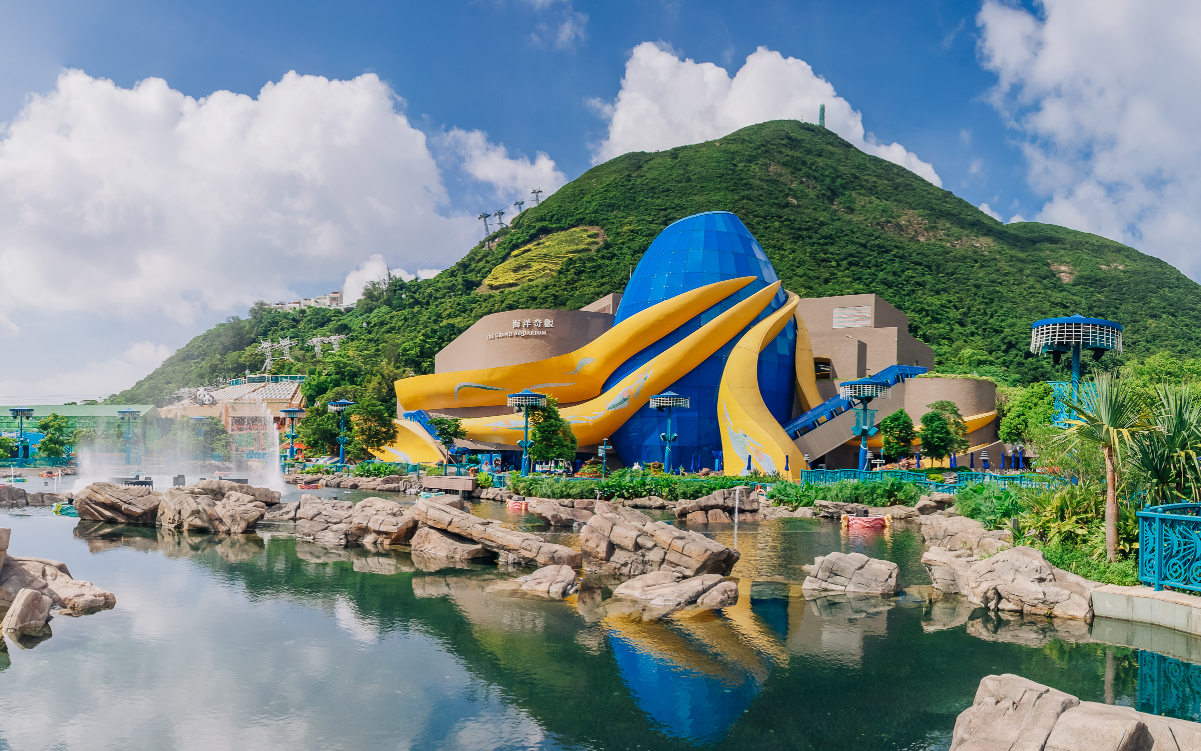
“By utilising the Park’s former Chinese Sturgeon Aquarium, a 4,000 sq ft facility with purified natural seawater systems, the partnership has created a sophisticated conservation hub capable of rearing tropical marine finfish with unprecedented precision and biological integrity. The project helps cultivate a thriving population of healthy grouper fingerlings while supporting the broader sustainable development goals for a low-carbon future,” said Ivan Wong, Chief Executive of Ocean Park Corporation.
Chi-Yat Kwok, Founder and CEO of The Oasis ONE, added, “At The Oasis ONE, we believe technology can bring people closer to nature. Our pioneering industrial chain solution is much more than efficiency; it is about biosecurity and traceability. By creating a 'clean loop' from genetics to growth, we are ensuring that the fish we return to the ocean or provide to the community are of the highest biological integrity, setting a new benchmark for ecological responsibility. In addition, following the restocking of giant grouper this June, we will continue our contribution to nature by developing more other local fish species to further enrich the project.”
Fish restocking exercise
Beyond strengthening local industry, the project is a direct contribution in the restoration of wild marine populations. In direct alignment with the Ministry of Agriculture and Rural Affairs’ National Fish Release Day, the first batch of these robust fingerlings will be responsibly and scientifically released as part of the Agriculture, Fisheries and Conservation Department’s upcoming restocking activity on 6 June 2026.
The milestone is the first step in a multi-year commitment to raise 100,000 fish fingerlings at Ocean Park. Through this partnership, Ocean Park and The Oasis ONE are also hoping to nurture a sustainable legacy for Hong Kong, ensuring that the city's marine heritage is preserved and revitalised.
1Hong Kong Fisheries Profile 2025 (https://www.afcd.gov.hk/english/fisheries/fish_abt/files/hk_fisheries_pr...)